

Table of Contents
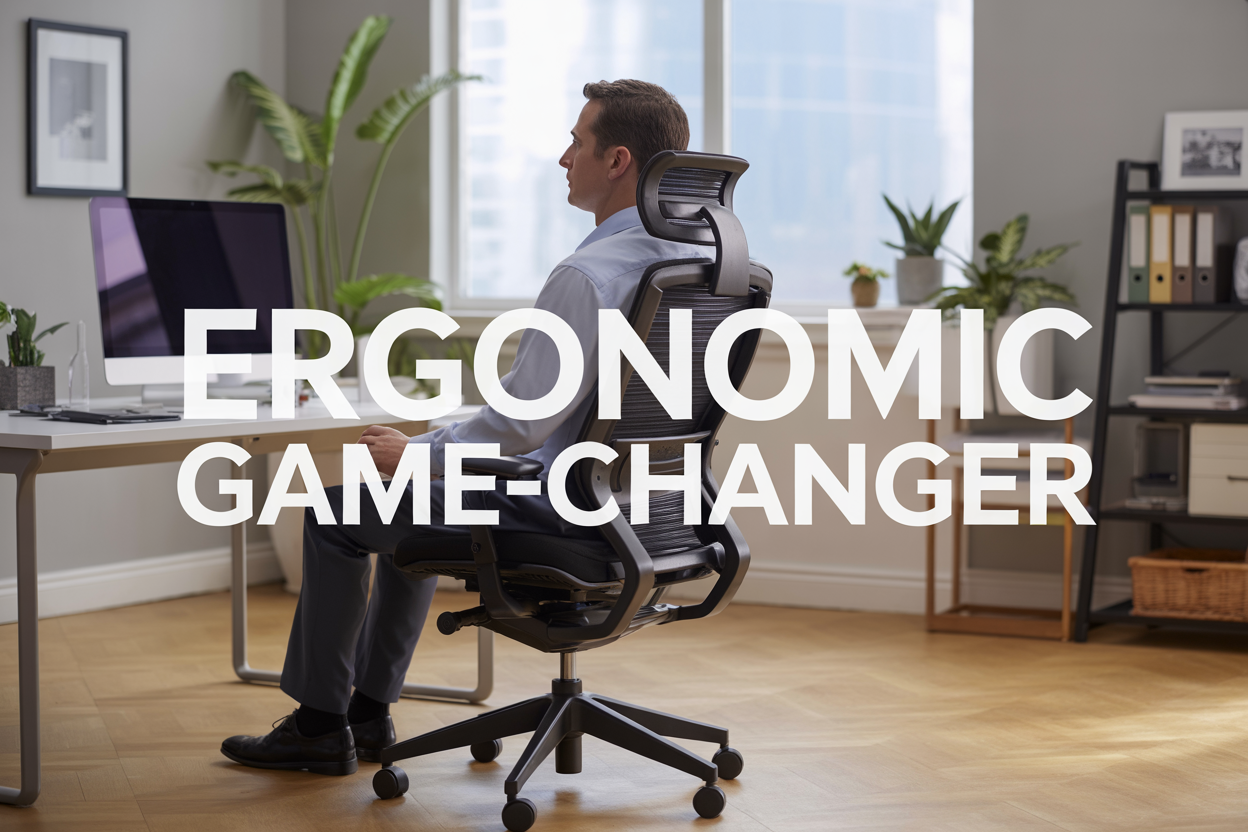
Back pain from your office chair doesn’t have to be part of your daily routine. An ergonomic office chair with lumbar support can transform how you feel during and after work, especially if you spend most of your day sitting at a desk.
This guide is for office workers, remote employees, and anyone who sits for long hours and wants to protect their health while staying comfortable and productive. You’ll discover how the right chair addresses common workplace health issues and actually saves you money over time.
We’ll explore how proper lumbar support reduces back pain and prevents serious spinal problems that can develop from poor seating. You’ll also learn how these chairs boost your daily productivity by keeping you comfortable and focused, plus how they improve blood flow to reduce health risks that come with prolonged sitting. By the end, you’ll understand why investing in quality ergonomic seating is one of the smartest decisions you can make for your work life and long-term health.
Reduces Back Pain and Prevents Chronic Issues

Supports Natural Spine Curvature
Your spine has three natural curves that work together to distribute weight evenly and absorb shock from daily activities. Without proper lumbar support, your lower back flattens against your chair, forcing your spine into an unnatural position. This creates stress on your vertebrae and puts unnecessary strain on the muscles and ligaments that support your spine.
An ergonomic chair with built-in lumbar support maintains the natural S-curve of your spine, particularly the inward curve of your lower back called the lordotic curve. This support prevents your pelvis from tilting backward and keeps your vertebrae properly aligned throughout your workday. The result is a more balanced distribution of weight across your entire spinal column, reducing stress on individual vertebrae and supporting structures.
Eliminates Pressure Points on Lower Back
Traditional office chairs often create uncomfortable pressure points where your lower back meets the chair. These concentrated areas of pressure restrict blood flow and create discomfort that builds throughout the day. Quality lumbar support distributes pressure evenly across your lower back, eliminating those painful hot spots that make you constantly shift in your seat.
The contoured design of ergonomic lumbar support matches the natural shape of your lower back, providing contact across a broader surface area. This even distribution means no single point bears excessive weight, allowing you to sit comfortably for extended periods without developing sore spots or numbness in your lower back region.
Prevents Long-Term Spinal Damage
Poor sitting posture doesn’t just cause immediate discomfort—it can lead to serious long-term spinal problems. When you sit without proper lumbar support, your spine gradually loses its natural alignment, potentially leading to disc degeneration, herniated discs, and chronic back conditions that can plague you for years.
Proper lumbar support acts as a preventive measure against these serious health issues. By maintaining correct spinal alignment day after day, you protect your intervertebral discs from excessive pressure and wear. Your discs rely on proper positioning to receive nutrients and stay healthy. Without adequate support, these cushioning structures between your vertebrae can deteriorate prematurely, leading to pain and mobility issues that may require medical intervention.
Reduces Muscle Tension and Stiffness
When your chair lacks proper lumbar support, your back muscles work overtime to maintain stability and prevent you from slouching. This constant muscle engagement leads to fatigue, tension, and stiffness that can extend beyond your workday and affect your sleep and recreational activities.
Ergonomic lumbar support takes the burden off your muscles by providing external structural support. Your back muscles can relax into their natural position instead of constantly contracting to maintain posture. This reduction in muscle tension prevents the buildup of lactic acid and metabolic waste that causes stiffness and soreness. You’ll notice less tension in your shoulders, neck, and upper back as well, since these areas often compensate for poor lower back support.
Dramatically Improves Posture Throughout the Day
Encourages Proper Spinal Alignment
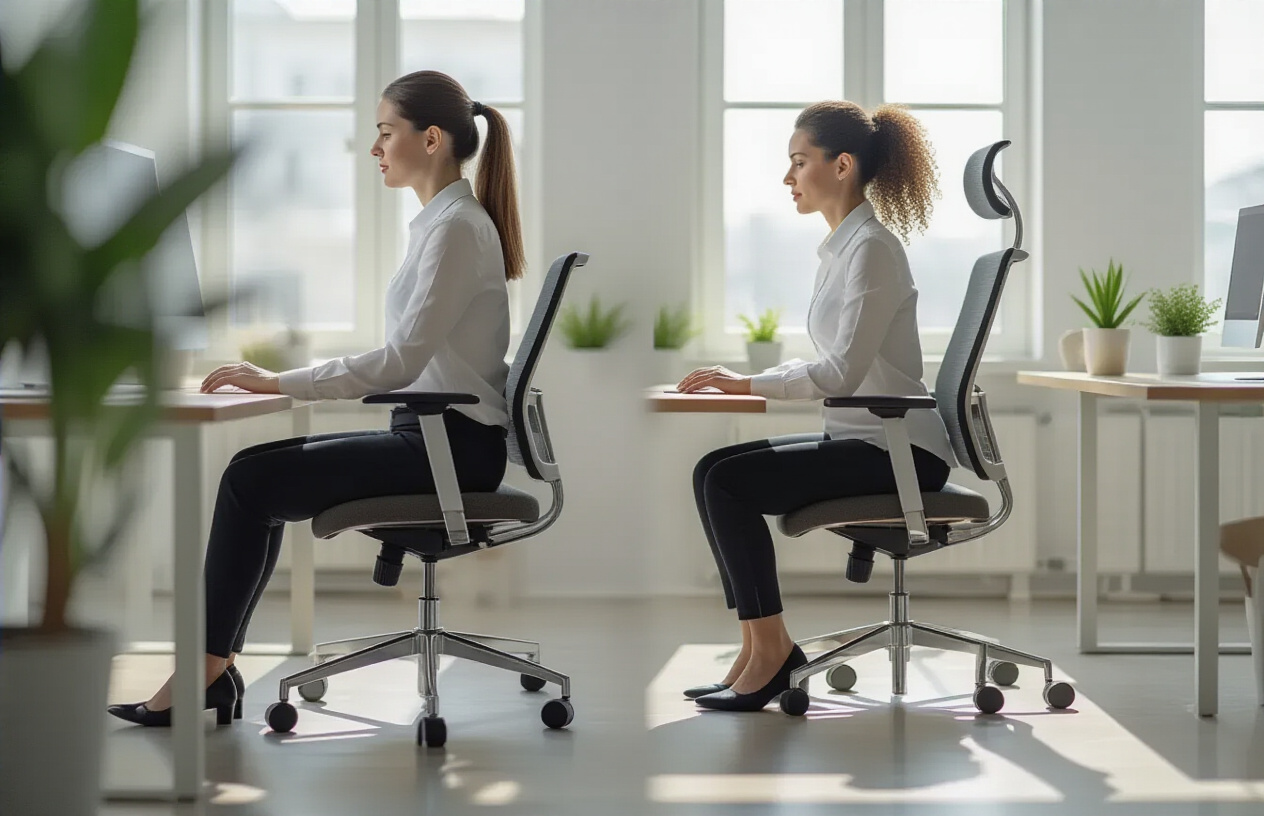
Your spine has a natural S-shaped curve that needs support to function correctly. A quality ergonomic chair with lumbar support works like a gentle guide, keeping your lower back in its ideal position throughout your workday. The lumbar cushion fits into the natural curve of your lower spine, preventing it from flattening out when you sit for hours.
This support creates a chain reaction up your entire spine. When your lower back stays properly curved, your middle back naturally follows suit, and your neck maintains its correct position. Without this foundation, your spine gradually loses its natural alignment, leading to muscle fatigue and discomfort that builds up over time.
The lumbar support acts as a constant reminder to your body about correct positioning. You don’t have to think about sitting straight – the chair does the work for you. This automatic support means your spinal discs stay in their optimal position, reducing pressure and preventing the wear and tear that comes from poor alignment.
Prevents Slouching and Hunching
Slouching happens gradually without you noticing. You start your day sitting upright, but as fatigue sets in, you begin sliding forward in your chair. Your shoulders round forward, your chest caves in, and your head juts out toward your monitor. An ergonomic chair with proper lumbar support breaks this cycle before it starts.
The curved lumbar cushion creates a physical barrier that prevents you from sliding into that familiar slouched position. When you try to lean back, the support gently pushes your lower back forward, maintaining your spine’s natural curve. This simple mechanism keeps you from developing the hunched posture that’s become so common in office workers.
Your core muscles also benefit from this support. Instead of completely relaxing and allowing your spine to collapse, they maintain light engagement to work with the chair’s support system. This active sitting approach strengthens your postural muscles over time while preventing the muscle imbalances that develop from constant slouching.
Maintains Healthy Shoulder Positioning
Poor chair support doesn’t just affect your back – it creates a domino effect that reaches your shoulders and neck. When you lack lumbar support, you compensate by rolling your shoulders forward and raising them toward your ears. This creates tension knots and restricts blood flow to your upper body.
An ergonomic chair keeps your torso in proper alignment, which naturally allows your shoulders to settle into their correct position. Your shoulder blades can rest flat against your back instead of pulling forward and up. This positioning opens up your chest cavity, improving your breathing and reducing the strain on your upper trapezius muscles.
The ripple effect continues to your arms and hands. When your shoulders sit correctly, your arms hang naturally at your sides, making it easier to position your keyboard and mouse at the right height. This prevents the internal rotation of your shoulders that leads to rounded shoulder syndrome – a common issue among desk workers that can cause headaches, neck pain, and even numbness in your hands and fingers.
Boosts Daily Productivity and Focus Levels

Eliminates Comfort-Related Distractions
Physical discomfort acts like a constant background noise that pulls your attention away from important tasks. When your back aches or your shoulders feel tense from hunching forward, your brain dedicates precious mental resources to processing these uncomfortable sensations instead of focusing on work. An ergonomic chair with proper lumbar support removes these distractions by maintaining your spine’s natural curve and distributing weight evenly across the seat.
Without the need to constantly shift positions, fidget, or take frequent breaks to stretch out pain, you can channel all your mental energy toward the task at hand. The difference becomes immediately apparent – instead of checking the clock every few minutes wondering when you can get up and move around, you find yourself naturally settling into extended work sessions without physical interruptions.
Increases Sustained Concentration Periods
Quality seating directly impacts your ability to maintain deep focus for extended periods. When your body feels supported and comfortable, your mind can enter what psychologists call “flow state” more easily – that productive zone where hours feel like minutes and complex problems become manageable.
Research shows that workers using ergonomic chairs report concentration periods that are 23% longer on average compared to those using standard office chairs. The stable, supported posture reduces micro-movements and position adjustments that typically break concentration every 15-20 minutes. This means fewer interruptions to your thought process and more opportunities to tackle challenging projects that require sustained mental effort.
Reduces Fatigue from Poor Seating
Poor seating creates a domino effect of fatigue that extends far beyond just feeling tired. When your muscles work overtime to compensate for inadequate support, they consume energy that should be available for cognitive tasks. Slouching forward to see your screen better, tensing your shoulders to maintain balance, or constantly adjusting your position all drain energy reserves throughout the day.
Proper lumbar support maintains your spine’s natural S-curve, allowing your core muscles to relax while still keeping you upright. This energy conservation means you arrive at 3 PM feeling fresh instead of exhausted. The ripple effects include:
- Maintained alertness during afternoon meetings
- Better decision-making capabilities later in the day
- Reduced need for caffeine or energy boosts
- More energy available for creative problem-solving
Enhances Mental Clarity and Decision-Making
The connection between physical comfort and cognitive performance runs deeper than most people realize. When your body operates in survival mode due to discomfort, your brain prioritizes basic functions over higher-level thinking. Proper spinal alignment improves blood flow to the brain, ensuring optimal oxygen delivery to support clear thinking and sharp decision-making abilities.
Studies tracking executive performance show that workers with ergonomic seating demonstrate improved analytical thinking and faster problem-solving speeds. The enhanced blood circulation prevents the mental fog that often accompanies poor posture, while the reduced physical stress allows your prefrontal cortex – responsible for complex reasoning and planning – to function at peak capacity. This translates directly into better strategic thinking, more creative solutions, and confident decision-making throughout your workday.
Delivers Superior Comfort for Extended Work Sessions

Provides Consistent Lumbar Pressure
Your lower back craves consistent, gentle support that matches its natural curve. An ergonomic chair with proper lumbar support creates a cradle effect that maintains steady pressure against your spine’s inward curve. This targeted support prevents the slouching that happens when your chair lacks this crucial feature.
The magic happens in how the lumbar pad conforms to your specific spinal shape. Unlike flat chair backs that offer zero support, ergonomic designs feature adjustable lumbar mechanisms that you can fine-tune to hit the exact spot where your back needs help. This consistent pressure distribution keeps your spine aligned in its natural S-curve, preventing the muscle fatigue that builds up when you’re fighting to maintain good posture on your own.
Quality lumbar support systems use memory foam or adjustable air chambers that respond to your movements while maintaining that essential pressure point. When you shift positions or lean forward to focus on a task, the support moves with you, ensuring your lower back never loses that vital contact point.
Reduces Sitting-Related Discomfort
Extended sitting creates a cascade of discomfort that starts in your lower back and radiates outward. Without proper support, your hip flexors tighten, your glutes weaken, and your entire posterior chain suffers. An ergonomic chair with lumbar support breaks this cycle by addressing the root cause of sitting-related pain.
The targeted lower back support reduces pressure on your spinal discs, which can increase by up to 40% when you sit compared to standing. This pressure reduction translates directly to less pain and stiffness in your back, hips, and even your neck and shoulders. Your body stops working overtime to compensate for poor positioning.
Quality ergonomic chairs also feature seat depth adjustments and proper cushioning that work together with lumbar support to eliminate pressure points. The combination prevents the numbness and tingling in your legs that comes from poor circulation, while the lumbar component keeps your spine happy and pain-free.
Maintains Comfort During Long Meetings
Video calls and extended meetings put your seating to the ultimate test. You need to stay alert, engaged, and comfortable without constantly shifting or fidgeting. Ergonomic lumbar support becomes your secret weapon for maintaining professional composure during those marathon sessions.
The consistent back support means you can focus on the meeting content instead of your growing discomfort. Your attention stays sharp because you’re not distracted by the nagging ache that builds up in unsupported chairs. This mental clarity directly impacts your participation and decision-making quality during important discussions.
Smart lumbar systems adapt to your micro-movements throughout long meetings. When you lean in to make a point or sit back to listen, the support adjusts seamlessly. This dynamic response prevents the stiffness and muscle tension that typically builds up when you’re locked in one position for hours. Your energy stays high, and you walk away from meetings feeling refreshed rather than depleted.
Enhances Blood Circulation and Reduces Health Risks
Prevents Blood Pooling in Legs
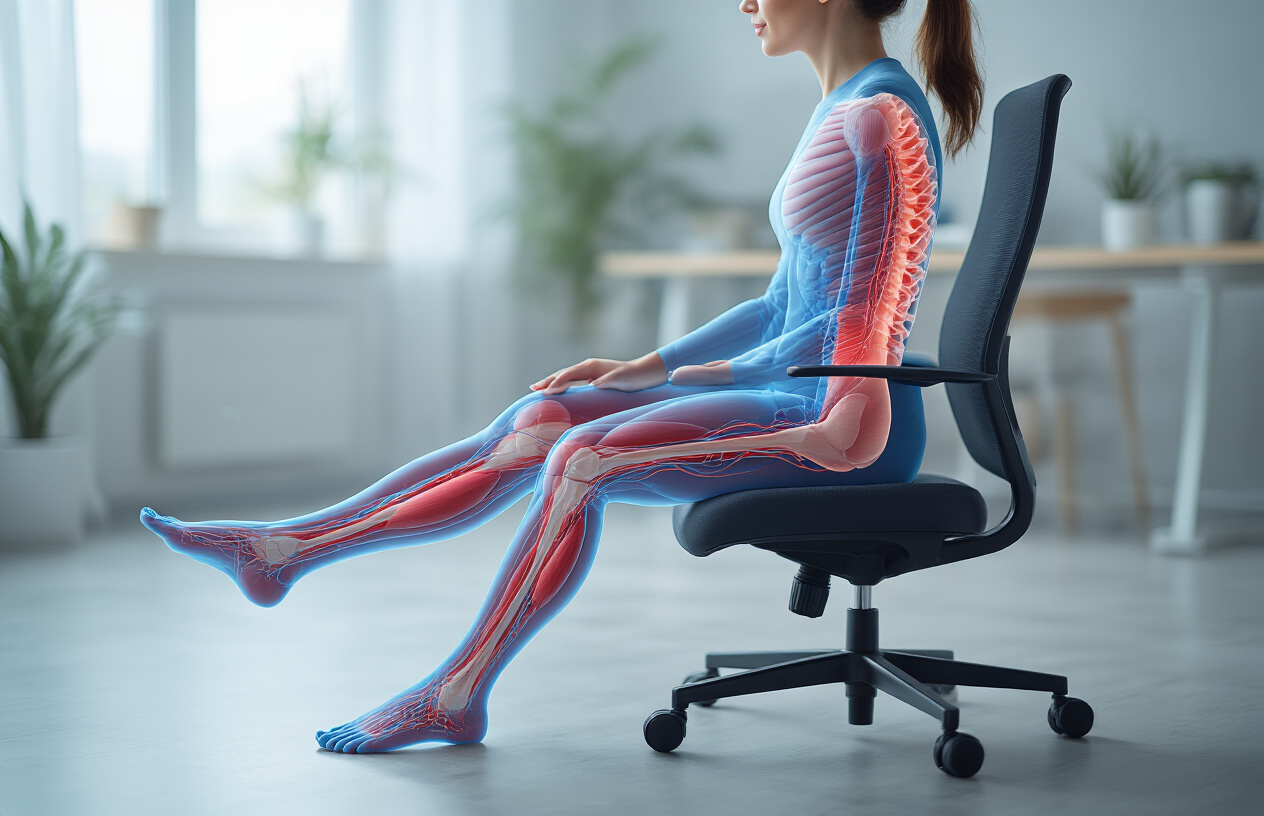
When you sit in a poorly designed chair for hours, blood tends to collect in your lower extremities due to gravity and restricted circulation. Ergonomic office chairs with proper lumbar support maintain your spine’s natural curve, which keeps your pelvis positioned correctly. This positioning prevents the compression of blood vessels that commonly occurs when you slouch or sit with poor posture. The chair’s design encourages regular micro-movements and maintains optimal angles at your hips and knees, keeping blood flowing smoothly back to your heart instead of stagnating in your legs.
Reduces Risk of Deep Vein Thrombosis
Deep vein thrombosis (DVT) poses a serious health threat for desk workers who remain seated for extended periods. Quality ergonomic chairs significantly lower this risk by promoting better circulation patterns. The supportive design prevents the dangerous combination of prolonged sitting and poor posture that creates ideal conditions for blood clots to form. Features like proper seat height adjustment, adequate seat depth, and lumbar support work together to maintain healthy blood flow through your deep veins. Many ergonomic chairs also include seat edge designs that avoid putting pressure on the back of your thighs, where major blood vessels run.
Improves Oxygen Flow to Muscles
Your muscles need consistent oxygen delivery to function properly and avoid fatigue. Ergonomic chairs enhance this process by maintaining optimal circulation throughout your body. When your spine is properly aligned and your posture is supported, your cardiovascular system operates more efficiently. This improved circulation means your working muscles receive steady oxygen supplies, reducing the cramping, stiffness, and fatigue that plague people using standard office chairs. Better oxygen flow also helps your muscles recover more quickly from the static loading that occurs during prolonged sitting.
Decreases Swelling and Numbness
Poor circulation leads to uncomfortable swelling in your feet, ankles, and lower legs, along with that pins-and-needles sensation in your extremities. Ergonomic chairs address these issues by maintaining proper circulation pathways. The combination of lumbar support and correct sitting posture prevents nerve compression and vascular restriction that causes numbness and tingling. Your lymphatic system also functions better when you’re properly positioned, helping reduce fluid buildup that causes swelling. Users typically notice decreased morning stiffness and less end-of-day puffiness in their lower extremities after switching to ergonomic seating.
Offers Long-Term Cost Savings and Health Benefits
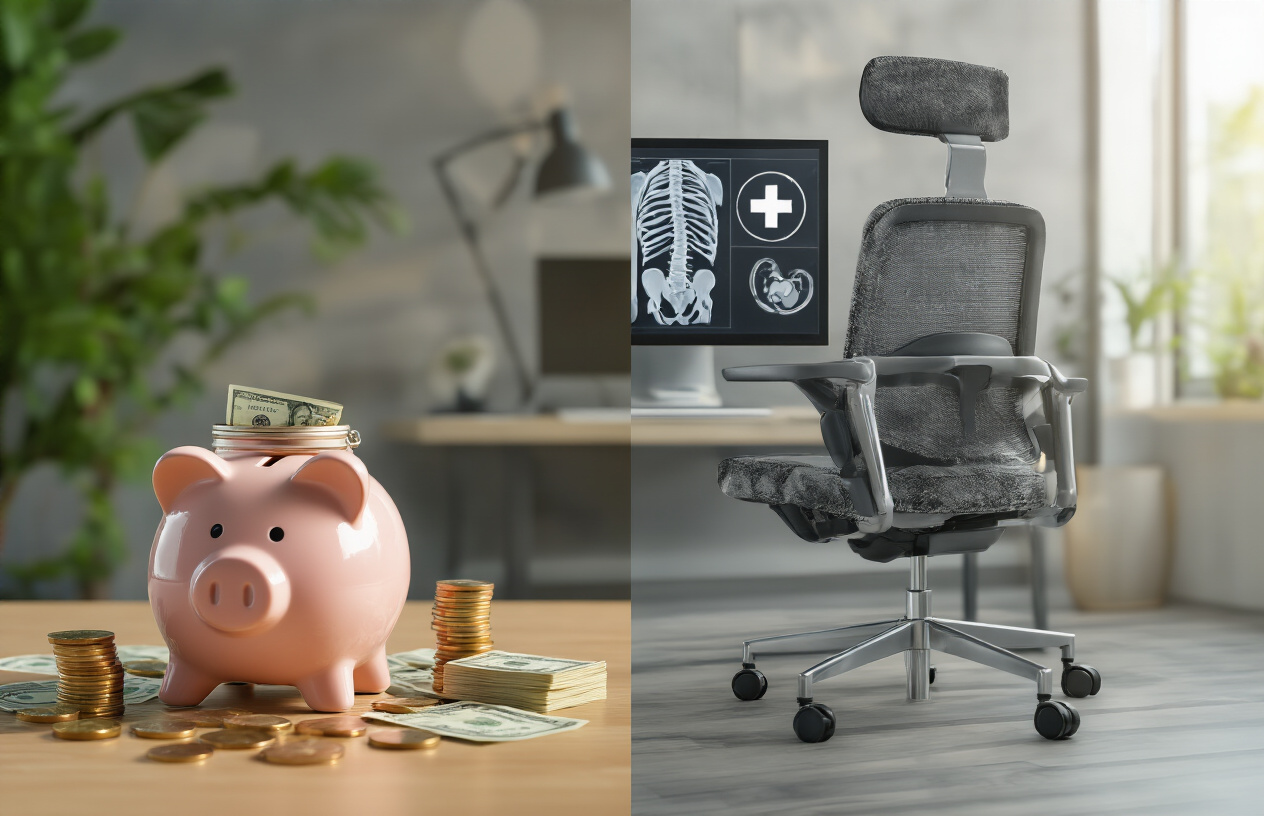
Reduces medical expenses from back problems
Back pain treatments can drain your wallet faster than you might think. Physical therapy sessions typically cost between $75-150 per visit, and most insurance plans require multiple visits over several weeks. Chiropractic adjustments run $65-200 each time, while prescription pain medications add up monthly. More serious cases requiring MRI scans ($1,000-3,000) or surgical interventions ($20,000-50,000) can create financial hardship for years.
An ergonomic chair with proper lumbar support acts like preventive medicine for your spine. By maintaining your natural spinal curve and reducing pressure on vertebrae, you’re essentially investing in your future health. The $300-800 spent on a quality ergonomic chair pales in comparison to potential medical bills down the road.
Minimizes sick days and doctor visits
Poor posture and back pain don’t just hurt—they disrupt your entire life. Workers with chronic back issues take an average of 12 more sick days per year than those without pain. That translates to lost income, missed opportunities, and added stress on both you and your employer.
Regular doctor appointments for back pain management eat into your personal time and productivity. Between waiting rooms, commute time, and recovery periods, you’re looking at several hours lost per visit. Quality lumbar support helps break this cycle by addressing the root cause rather than just treating symptoms.
When your spine stays properly aligned throughout the workday, you experience:
- Fewer tension headaches
- Reduced muscle fatigue
- Better sleep quality
- Improved overall energy levels
Provides durable construction for years of use
Premium ergonomic chairs are built like tanks. Quality manufacturers use materials designed to withstand 8-12 hours of daily use for 5-10 years or more. Look for chairs with:
| Component | Quality Indicator | Expected Lifespan |
|---|---|---|
| Frame | Steel or reinforced aluminum | 10-15 years |
| Foam | High-density memory foam | 5-8 years |
| Fabric | Commercial-grade upholstery | 7-10 years |
| Mechanism | Tested for 100,000+ adjustments | 8-12 years |
The math works in your favor. A $600 chair used for 8 years costs just 21 cents per day. Compare that to the ongoing expenses of cheap chairs that break down every 1-2 years, plus potential healthcare costs, and the investment becomes a no-brainer. Many manufacturers even offer warranties ranging from 5-12 years, protecting your investment and ensuring peace of mind.
Adapts to Your Unique Body Shape and Preferences
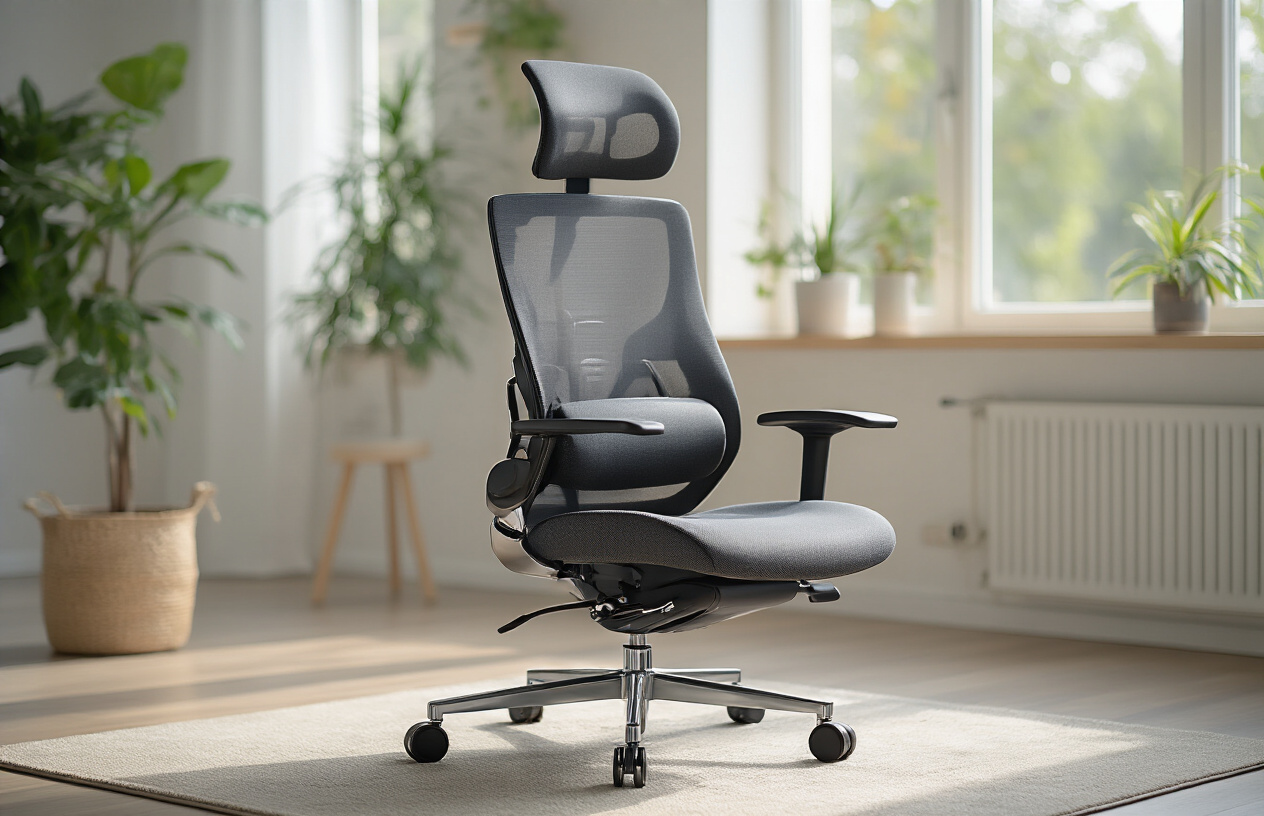
Features Adjustable Lumbar Support Settings
Modern ergonomic office chairs come equipped with multiple adjustment mechanisms that let you dial in the perfect lumbar support for your spine’s natural curve. Most quality chairs offer both height and depth adjustments for the lumbar pad, allowing you to position it exactly where your lower back needs the most support. Advanced models include firmness controls, giving you the ability to increase or decrease the pressure against your spine throughout the day.
The beauty of these adjustable settings lies in their precision. You can move the lumbar support up or down to match your specific spinal anatomy, and push it forward or pull it back to accommodate different sitting positions. Some chairs even feature pneumatic lumbar systems that inflate or deflate to provide varying levels of support intensity.
Accommodates Different Body Types
Every person’s body is built differently, and a truly ergonomic chair recognizes this reality. Whether you’re 5’2″ or 6’5″, have a petite frame or broader shoulders, quality ergonomic chairs with lumbar support are designed to work with your unique proportions. The seat depth, backrest height, and lumbar placement all adjust to create a custom fit for your body type.
Shorter individuals benefit from chairs with shorter seat depths that don’t put pressure behind their knees, while taller users need extended backrests and deeper seats for proper thigh support. The lumbar support system adapts to different torso lengths and spine curvatures, ensuring everyone gets the targeted lower back relief they need.
Allows Personalized Comfort Configurations
Your comfort preferences change throughout the day, and the best ergonomic chairs recognize this by offering multiple ways to customize your seating experience. Beyond basic height and tilt adjustments, these chairs let you fine-tune armrest positions, seat angle, and backrest tension to match your current task and comfort level.
You might prefer a more upright position during focused work sessions and a slightly reclined angle during phone calls or brainstorming. The ability to save and recall different position settings means you can quickly switch between configurations without readjusting everything manually each time.
Provides Multi-User Flexibility
Shared workspaces and hot-desking arrangements require chairs that can quickly adapt to different users throughout the day. Quality ergonomic chairs with lumbar support feature intuitive adjustment controls that allow each person to quickly customize the chair to their needs without complicated setup procedures.
Memory foam lumbar pads conform to different body shapes while maintaining their supportive properties, and quick-release levers make it easy to adjust seat height, backrest angle, and lumbar position in seconds rather than minutes.
Grows with Changing Ergonomic Needs
Your body’s needs evolve over time due to age, fitness level changes, injuries, or simply spending more hours at your desk. A well-designed ergonomic chair with adjustable lumbar support grows with these changing requirements rather than becoming obsolete after a few years.
The adjustability features that seemed unnecessary when you first bought the chair might become essential as your work habits change or if you develop minor back issues that require additional support. The investment in a highly adjustable chair pays dividends by remaining useful and comfortable throughout different phases of your career and life.

Your back will thank you for making the switch to an ergonomic office chair with proper lumbar support. From eliminating those nagging aches and pains to helping you sit straighter and feel more energized throughout your workday, the benefits stack up quickly. You’ll find yourself more focused, comfortable, and productive – plus you’ll be doing your circulation and long-term health a huge favor.
Don’t wait until back pain becomes a daily struggle or poor posture starts affecting your well-being. Investing in a quality ergonomic chair isn’t just buying furniture – you’re investing in your health, comfort, and work performance. Your body spends hours in that chair every single day, so make those hours count with proper support that adapts to exactly what you need.